

 HERA experienced its best financial year to date, following a strong year for heavy engineering with building and construction remaining very strong despite skills shortages and disruptions from Covid-19. We pivoted to digital delivery of services, and had high demand for HERA training and certification. HERA continued investment in Industry 4.0 capability, through fit-out of the Fab4.0lab and seeding of some key research projects, as well as progressing development of the HERA Innovation Centre in collaboration with the HERA Foundation. HERA also commissioned a key investigation of productivity benefits associated with the construction sector’s adoption of Industry 4.0 which demonstrated significant financial benefits. We also invested in the development of structural fire engineering capability and delivery of more design guides. Our Sustainability Fund projects, including the development of Australasia’s first material passport, development of the zero carbon steel program and steel recycling reports, demonstrated steel is a leader in Aotearoa’s circular economy where the recycling rates of steel in building and construction waste were estimated at 85%.
 HERA successfully launched our Future Forum 20/20 VISION conference, highlighting the role innovation has to play in positioning our industry for long term success and to prepare for future disruptions. We also developed Pūtātara – our digital content support service, which included refurbishing an existing storage space to create a multi-media room to support industry in amplifying their voice. HERA was also certified zero carbon for its operations, and refurbished our workshop at HERA House to create our Fab4.0Lab. These initiatives were pivotal in meeting our commitments to sustainability and developing an Industry 4.0 framework. All in all, 2020 was a tough year – but we responded well to the Covid-19 pandemic, having already focused on building our digital services for members and ramping up SFC and training activities.
 Matthew Kidson takes over as our Executive Chair, in a year where we publicly released our new vision to secure tomorrows industry by innovating today, and mission to build a passionate tribe of metal heads who innovate successfully. This was embedded via a new strategy and focus on automation and industry 4.0 within our framework. We also announced the build of a new Innovation Centre to facilitate technology transfer, prototyping, research & training, as well as launched welding productivity and automation capability assessments to benchmark industry performance. We became a founding member of the Diversity Agenda, selecting Sarah Lewis as our first inaugural recipient of our Whanake Scholarship to improve Maori engagement in engineering. We also completed pivotal research on how NZ society perceives steel and our metals industry in general, which will form our key communication campaigns in the coming year. We also debuted our podcast ‘Stirring the Pot’, and were instrumental in re-invigorating the Sustainable Steel Council as we work to meaningfully participate in the zero emissions conversation.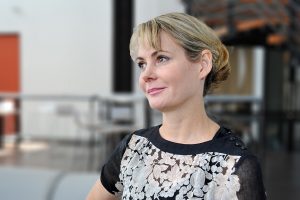
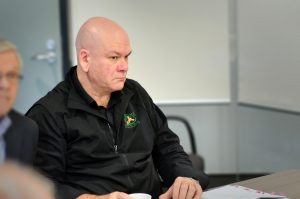 Mike Lehan becomes Chair in a particularly booming steel construction sector which benefited our strategic focuses. Our R&D saw many transitions with AS/NZS 5131 moving from draft to publication and the ending of our AGGAT program due to a lack of funding & industry support. SFC continued to grow from strength to strength. Fair and free trade and balanced decision making in government procurement continued to drive our advocacy works. And after 31 years of loyal service, our year closed out with the retirement of our Director Dr Wolfgang Scholz.
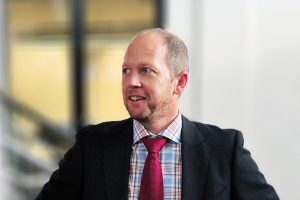 Under Chair John Frear and a solid levy surplus – it was a productive year. Our standards work saw the first joint Australian and New Zealand Standard 5100.6 Steel and Composite Construction and Draft AS/NZS 5131 Fabrication and Erection of Steel released for public comment. HERA ANB also issued 60 qualifications, with 21 members become certified under the SFC scheme. Now representing 75% of this capacity in New Zealand.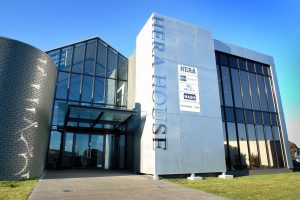
 Renovations on HERA House start. Amid this, much work in cooperation with SCNZ to launch the Steel Fabricator Certification (SFC) Scheme is done. We also award 23 Welding Supervisor and 22 IIW Welding Inspector qualifications as an ANB.
 Parliament approves a new Heavy Engineering Research Levy maximum, raising it to $10 per tonne of heavy steel. During this time we successfully drive works in a joint Australian New Zealand Steel Concrete Composite Standard for public comment. Also publishing a tender evaluation report considering whole-of–life costing and balanced decision making in partnership with BERL. Due to being accredited as the IIW Authorised National Body (ANB) for New Zealand, we’re allowed the provision of internationally recognised welding qualifications for our education offerings.
 Our industry growth post GFC gets back on track with heavy steel consumption growth. With a good economic environment, we effectively lead our first trade delegation to America to advance our research in geothermal energy. Also securing Government co-funding for our Above Ground Geothermal and Allied Technologies (AGGAT) program as well.
 Industry productivity becomes our focus, with renewable energy strongly on our radar. However, a delay in industry supported research levy increases puts financial pressure on both us and the Government.
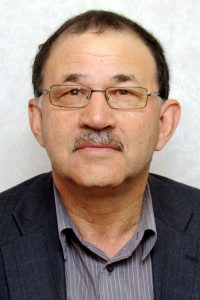 Peter Hutton becomes Chair – amidst heavy steel volume drops and steel price adjustments back to pre-2005 levels. Our research is focused on understanding the effects of free trade agreements and increasing opportunities from exports. Also, a revamp in our offering sees the introduction of a new website going live and the development of our ‘research roadmap’ service to help members identify pathways to market.
 The GFC hits our industry hard with a drop in steel volumes by 34%. With our Bridge Development Group (BDG) efforts bear fruit at a crucial time with new concept network arch bridges being implemented in several high profile bridges.
 Our industry records heavy steel usage of close to 170,000 tonnes. A high reflected internally as we welcomed a new division offering in Industry Development. Our Composite Structural Assembly (CSA) research project successfully files a patent for an interlocking composite panel system. And, we achieve ‘private training establishment’ status under NZQA.
 We become accredited as an IIW Authorised Training Body under WTIA as an approved national body for New Zealand. We also see the Metals Institute of New Zealand proposal launched under a revision of our Heavy Engineering Research Levy Act. And, in collaboration with the Auckland University of Technology our first metal forming activity is established.
 We discontinue our CBIP examination services and SCI-NZ transforms into what is now known as Steel Construction New Zealand (SCNZ).
 A big jump in steel volumes sees New Zealand’s annual heavy steel usage top nearly 150,000 tonnes. This comes amidst a strong return where we’re able to secure a $6million R&D grant over six years to establish a new export focused manufacturing sector around steel based Composite Structural Assemblies.
 The first New Zealand Metals Industry Conference “United to grow the industry” is held in Rotorua and attended by over 300 people. In collaboration with SSAS and SCI-NZ we also promote the Code of Practice for Structural Steel Work Documentation.
 Graeme Ridley is appointed Chair – and our Executive Board goes on to approve its first five year strategic plan. The adoption of a new HERA logo and tagline “Innovation in Metals” creates a new era for our branding. Also, SSAS launches an on-line connection guide and we support NZSSDA to publish their Blue Book “Code of Practice for the Fabrication of SS Plant & Equipment.”
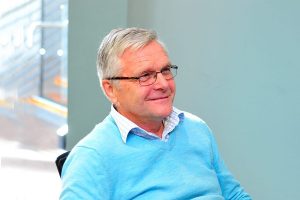 Dr Wolfgang Scholz becomes Director – steering in a year that sees our seismic steel construction program produce a new moment resisting connection ‘the sliding hinge joint.’ SSAS also double the tonnage of steel work proposed to 10,000 tonnes, and our membership reach 531. Additionally, our accreditation as an IPENZ training provider is achieved.
 Our report R4-100 Structural Steel Work Connections Guide published by SSAS boosts the use of structural steel throughout New Zealand. Which is complimented by our new team expertise in Finite Element Analysis. We also see our Steel Design and Construction Bulletin increase to six issues per year as our most highly ranked communication source by members.
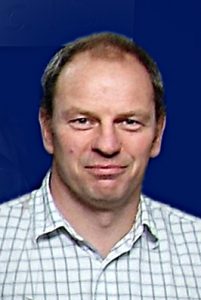 Duncan Fraser takes over as Chair for our 20 year anniversary. Which sees us hit a training record of 8 seminars and 11 courses in 36 session in 7 towns attended by 614 people. A total of 14000 copies of the welding training modules are also sold and the first networkable version of PROWELD released.
 Our Welding Centre celebrates its ten year anniversary – extending its metallurgy consulting based research to the casting area. We also start our most significant government co-funded structural steel research project on welded moment-resisting steel frames. During which time we publish a substantial revision of NZS 3404: 1977 in collaboration with the Steel Structures Panel and target the steel bridge market with SSAS.
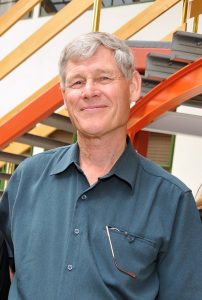 Dr John Meikle is appointed Director – ushering in a year where the biggest welding convention in New Zealand is held in collaboration with IIW – the Asian Pacific Welding Congress. The universal use of our welding training modules throughout NZ polytechnics and companies is also achieved. And, our metallurgical expertise are also introduced to our offerings. Unfortunately, Force Five initiatives come to end, but are taken over by JV96 to identify Australian market opportunities.
 David Band becomes Chair. Celebrating the sale of our first Welding Training Modules for 13 unit standards, and the comeback of steel above 100,000 tonnes to be close to pre-share market crash days. Our membership also hits over 400 companies.
 This year we establish a Steel Analysis Service (SSAS) supported by BHP NZ Steel. Also starting our Steel Design and Construction Bulletin and releasing our welding expert system PROWELD to membership as well.
 HERA contributes to the new Building Control System becoming operational – a fully performance based national system. And, our Limit States Design Seminar becomes the most successful structural steel seminar series in industry.
 Our charitable trust the Heavy Engineering Education Research Foundation (HEERF) is established to drive metals engineering as a career. During which time our membership is also widened to include designers and consultants – taking us up to 241 members.
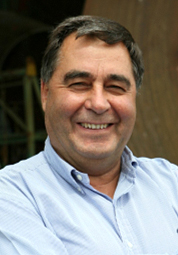 Peter White-Robinson is elected Chair. With HERA successfully carrying out a trade mission to Australia to drive export opportunities and submit the first draft of the Limit States Steel Structures Code DZ 3404 for review. We also establish ties to the Australian Structural Steel Welding Committee to achieve joint standards between our countries.
 Our Welding Centre drives the development of a Modular Training Scheme for Welding in New Zealand. Which eventually is used by most welding training providers.
 Bill Fraser becomes Chair – in a year where we publish the first Design Guide and Guidelines on the safe erection of multi-story building steel work. This later establishes us as the centre for preparing national design codes for adoption through the SANZ process. We also hold our first full time three week welding course outside of Auckland and obtain a reciprocity agreement with the American Welding Society. Force Five also hold an international trade fair in Papua New Guinea to drive offshore business opportunities.
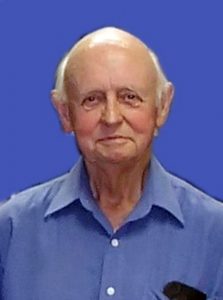 Keith Smith is appointed for his second term as Chair. He oversees major government research funding changes from a subsidy base to allocation on a competitive basis. A drop in import tariffs also makes steel construction more competitive.
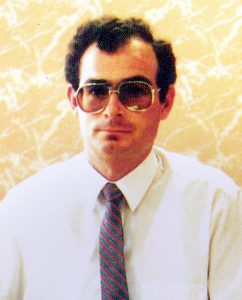 Dr W. Lew Richards is appointed Director – where the research levy on welding consumables of $0.02/kg becomes effective. The share market also crashes creating a major down turn in the construction industry. During this time our training centre is established to coordinate all courses and seminars offered by HERA and CBIP. We also see the formation of Force Five – a joint venture between five member companies driving offshore market research.
 David Jones takes over as Chair and sees the First Pacific Structural Steel Conference held. During this time the introduction of import licencing of abandoned steel for more competitively priced steel sparks steel fabrication work. Also, the adoption of our Welding Centres Panel and first Manager Dr Wolfgang Scholz starts.
 Cyril Baker becomes Chair – signing a contract to build HERA House, which is later opened by the Minister of Science and Technology.
 Our steel levy increases from $3 to $5 per tonne and a Japanese connection with Professor Kato and Takanishi inspires a seismic steel construction research program. We also hold our first Heavy Engineering Industry Development Conference.
 Tom Just takes over as Chair – supporting our first research fellow at the University of Canterbury. We also co-found the Certification Board for Inspection Personnel (CBIP) to improve the quality and reliability of NDT testing of steel vessels and structures. Establishing a comprehensive training program to support skills training.
 Our first Steel Design Award in collaboration with the newly formed Steel Promotion Council (HERA, NZ Steel Merchants Stockholder Association, NZ Steel Ltd and Pacific Steel Ltd) exposes and promotes steel to architects.
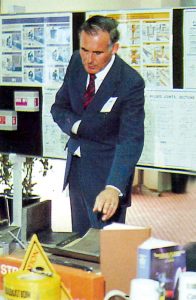
 A year of firsts. The first report published, 34 companies are registered as members and Dr Robin Shepperd is appointed our first Director – leasing our first office premises.
Delve more into our history!
A history of our first 25 years was presented to members at the second Metals Industry Conference in 2004. The first part written by the late Gavin Fletcher who was our Director from 1980 to 1986, and the second section by our Founding Chair – the late Keith Smith.